Making Digital Practice Management Accessible for Small Dental Clinics
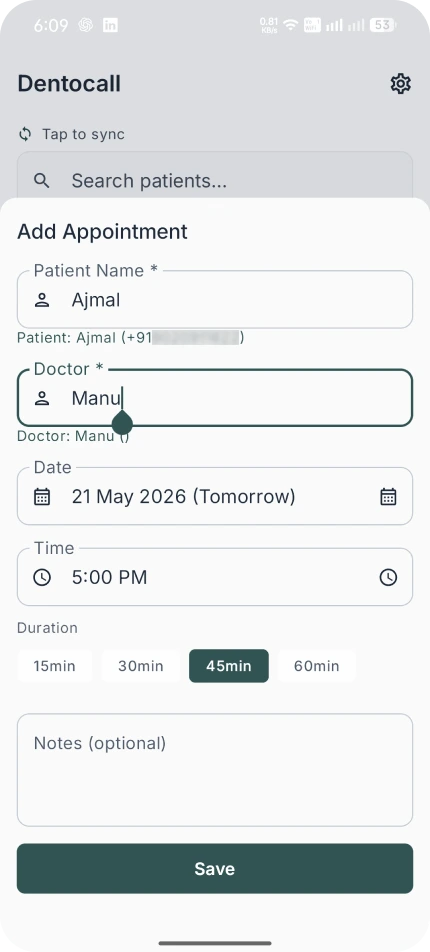
The primary goal behind Dentocall App was to make digital practice management affordable for small dental clinics while providing the essential tools needed to run and grow their practice efficiently.
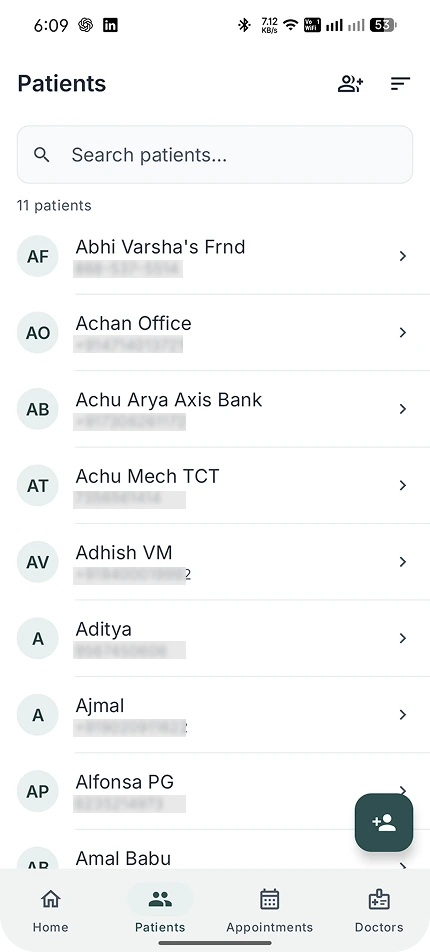
Contact import reduced patient onboarding effort by 85%, allowing dentists to migrate an average of 150 patient records in under 3 minutes.
95% of participants completed core clinic tasks without assistance during their first use.
How the Idea Started
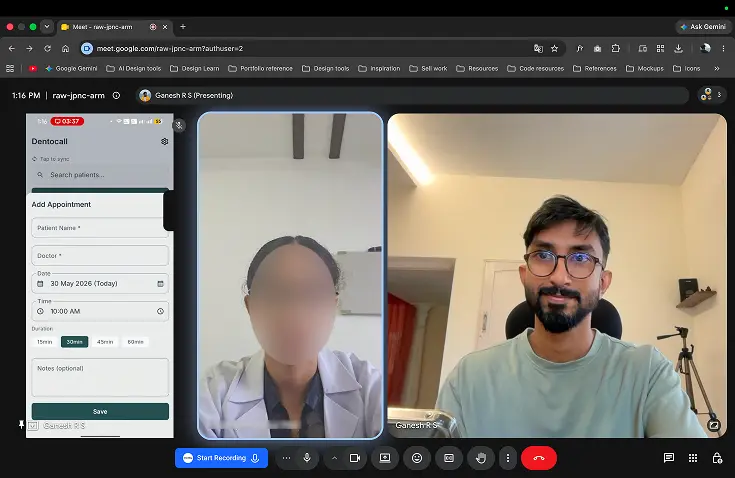
The idea for Dentocall began during a conversation with my cousin, a dentist preparing to launch his own clinic. As someone curious about digital products and technology, I asked him what software he planned to use for managing patient records, appointments, and day-to-day clinic operations.
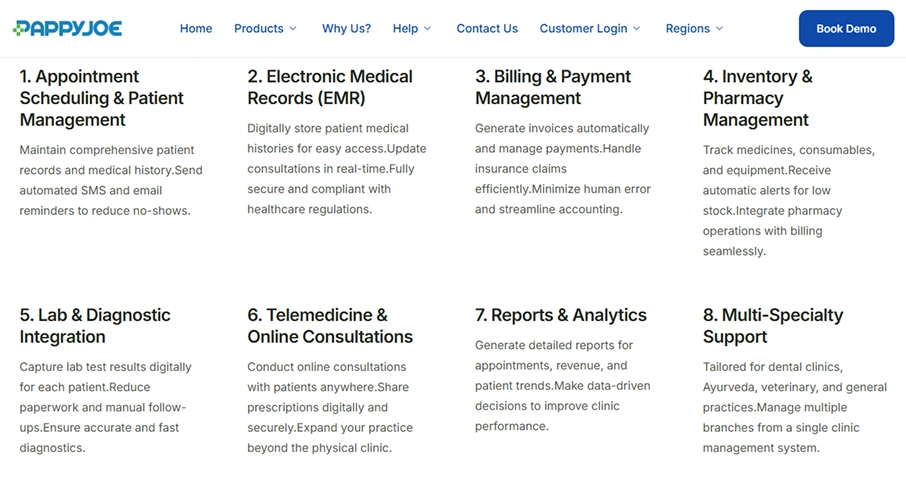
He mentioned platforms like HyphaCare, Pappyjoe and Dentobee, which were already being used in clinics where he had previously worked. At the same time, he pointed out that many smaller clinics still relied on traditional paper-and-pen methods to manage patient information.
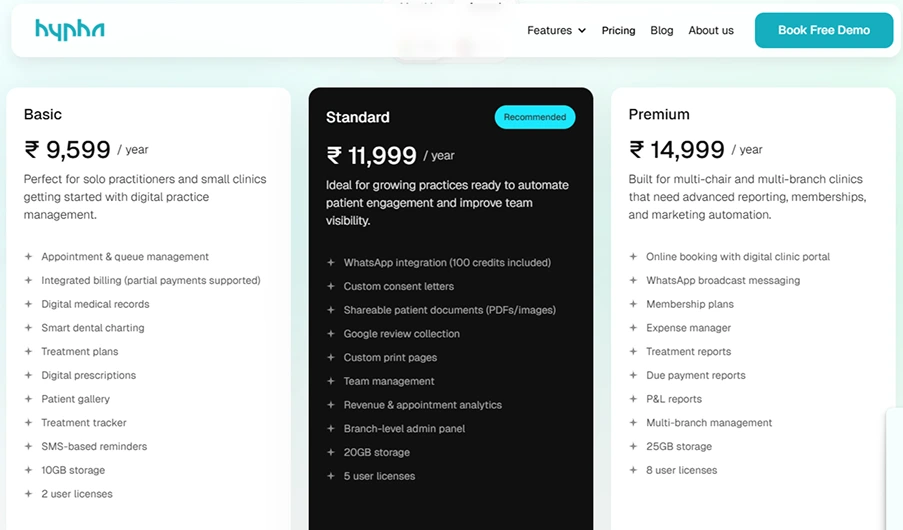
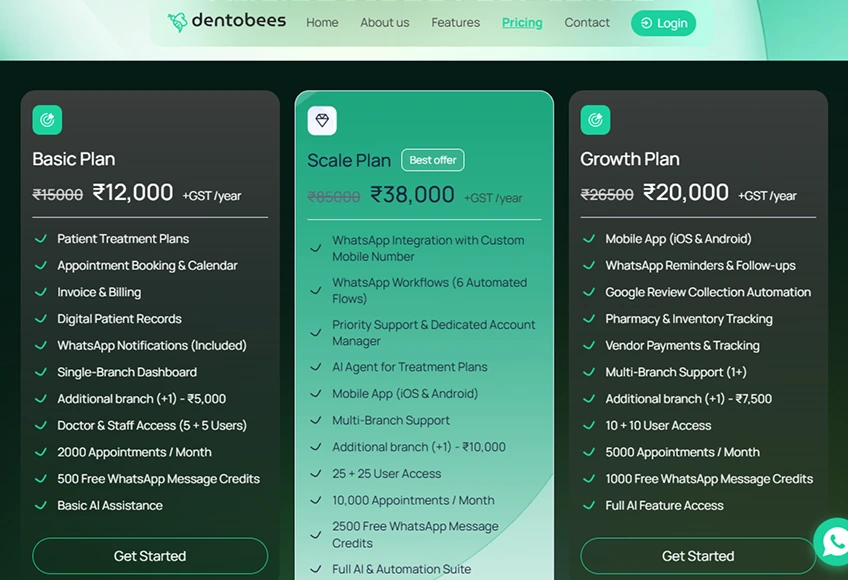
While these existing platforms offered extensive features and robust functionality, they also introduced a major challenge for smaller clinics: affordability. Most of these solutions operated on expensive yearly subscription models, creating hesitation among dentists who were either starting their practice independently or running small-scale clinics with limited budgets.

Why Affordability Mattered
For dentists starting their own clinics, software was rarely the first priority. Most had already invested heavily in infrastructure, equipment, interiors, staff, and operational setup before even seeing their first patients.
At that stage, paying high recurring subscription fees for clinic management software often felt unjustifiable, especially when the return on investment was unclear in the early months of practice.
As a result, many clinics continued using paper records simply because it felt safer and cheaper in the short term.
The longer clinics relied on paper-based systems, the harder it became to transition to digital tools later. Years of patient records became locked inside physical files, creating a psychological and operational barrier to adoption.
This revealed that the challenge was not just about building affordable software — it was about reducing the friction of digital adoption itself.
Early Exploration
I began questioning what actually justified the high cost of existing clinic management systems. Will small clinics truly use advanced features, and which features do they actually consider essential? I began exploring whether a lightweight, locally operated solution could deliver the essential workflows clinics relied on — without forcing independent practitioners into expensive long-term subscription models. One obvious direction was local data storage. By reducing dependency on cloud infrastructure, operational costs could be significantly lowered, making the product far more accessible for small clinics.
However, moving toward a local-first approach introduced important trade-offs. Three key gaps quickly emerged:
- WhatsApp notification integrations for appointment reminders and communication
- Real-time sync across multiple devices
- Online backups and recovery systems to reduce the fear of losing patient data
Research
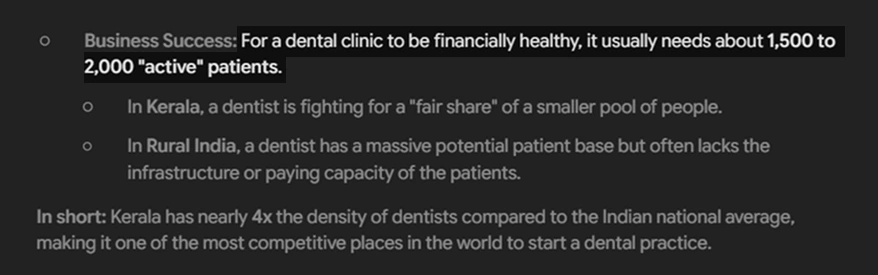
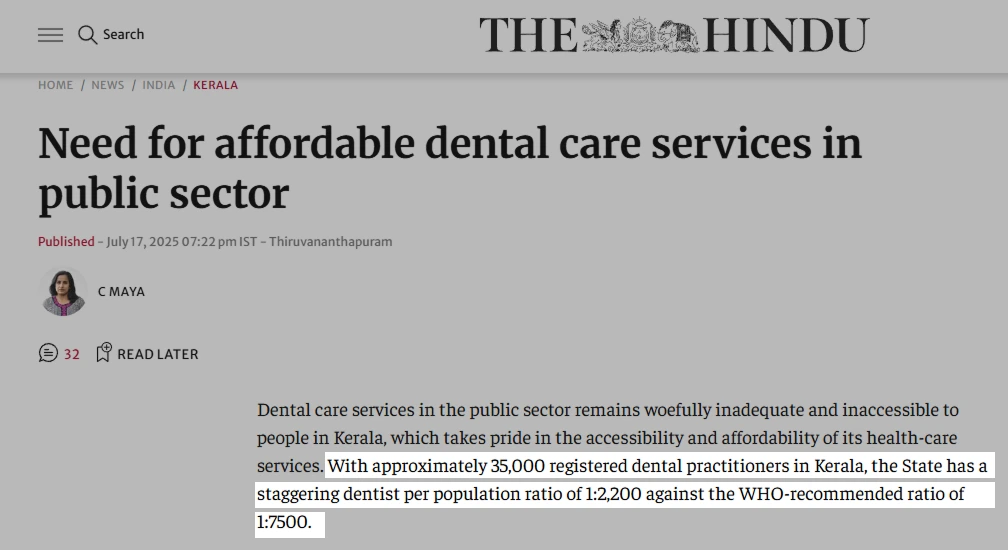
Kerala's ratio of 1:2,200 means the state has nearly 4x the density of dentists compared to the rest of the country. This creates a highly distinct market ecosystem:
The Single-Chair Culture: Unlike major metros where multi-city corporate dental chains dominate, Kerala's market is built on a culture of individual, standalone "single-chair" practices.
Hyper-Competitive Local Growth: With 600 to 800 new clinics opening every year—concentrated in hotspots like Ernakulam (Kochi), Thiruvananthapuram, and Malappuram—new practices face intense local competition.
The Seasonal Business: To survive this saturation, local clinics heavily rely on NRI seasons (August, December–January) and high-margin dental tourism to drive profitability.
Before a dentist can even think about patient records, they must invest heavily in physical setup:
High Physical Overhead: Medical equipment (dental chairs, X-ray units, compressors), sterilization tools, clinic interiors, prime real estate rent, and staff salaries.
Sustained Operational Costs: Routine materials (composites, bonding agents), lab fabrication fees for crowns, and paying visiting specialists (who typically claim a 40–50% cut of specific procedures) consume 60% to 70% of gross monthly earnings.
| Metric | National Average (India) | Regional Focus (Kerala) |
|---|---|---|
| Registered Dentists | ~380,000+ | ~36,800+ |
| Estimated Total Clinics | 180,000 – 200,000 | 10,000 – 12,000 |
| Dentist-to-Population Ratio | 1 : 8,000 – 10,000 (Rural drops to 1:20,000+) | 1 : 2,200 (Highly saturated) |
| Annual Market Inflow | ~7.6% industry growth rate | 600 – 800 new clinics launched/year |
| Educational Pipeline | Massive nationwide output | 26 dental colleges generating ~2,100 graduates/year |
The Insight: Dentist is taking home less than ₹1 Lakh in their first year while trying to break even on a massive hardware investment, asking them to commit to an upfront annual SaaS subscription creates instant friction. They regress to pen-and-paper because it feels financially safer in the short term.
Solution
A Selection of Experiences I Shaped
I have all the data on paper. How will I transfer that?
This was the first question every doctor asked. My initial thought was OCR — or even offering to enter all the details manually as a service. But after conversations with doctors, a simpler truth emerged.
Doctors already had their patients' phone numbers saved. They had WhatsApp conversations, call logs, and contact cards. The data wasn't lost — it was just in the wrong place.
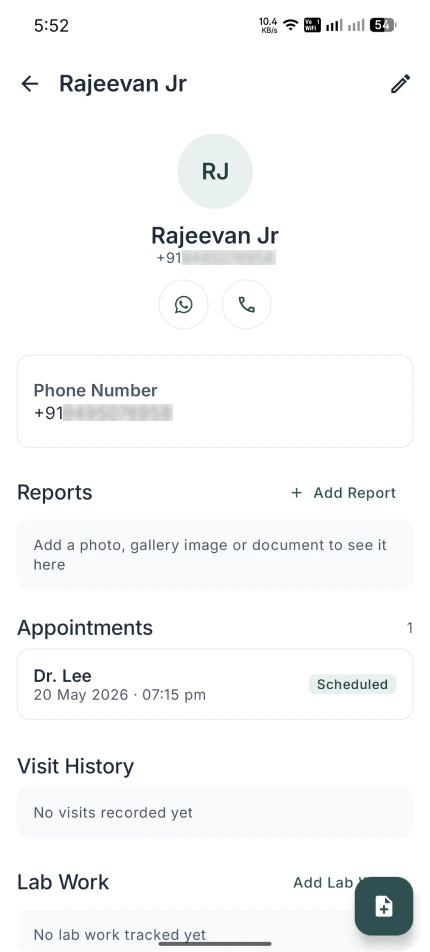
Import from Contact became the answer. Clinics could pull patient names and numbers directly from their phone contacts — no manual re-entry needed.
Couldn't Compete with WhatsApp Integration but...
Most clinic management systems offered WhatsApp integration through a separate business number, primarily for automated reminders and follow-up messages. However, dentists were already managing patient conversations through their personal or existing clinic WhatsApp accounts, where communication history and patient context were readily available.
Instead of introducing another communication channel, I integrated direct navigation to each patient's existing WhatsApp conversation. This allowed dentists to continue using their familiar communication workflow while accessing patient information from within the application. By preserving existing habits rather than replacing them, the solution reduced friction, eliminated the need to manage multiple WhatsApp numbers, and ensured that patient communication remained centralized in the channel doctors were already using daily.
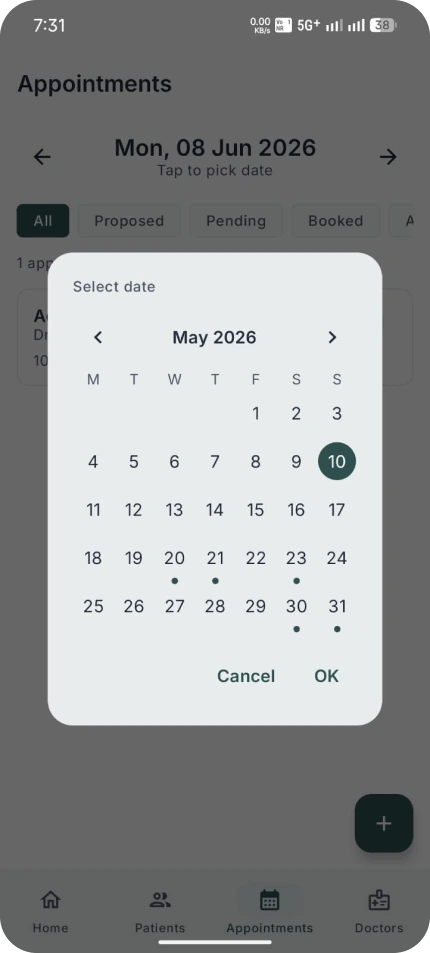
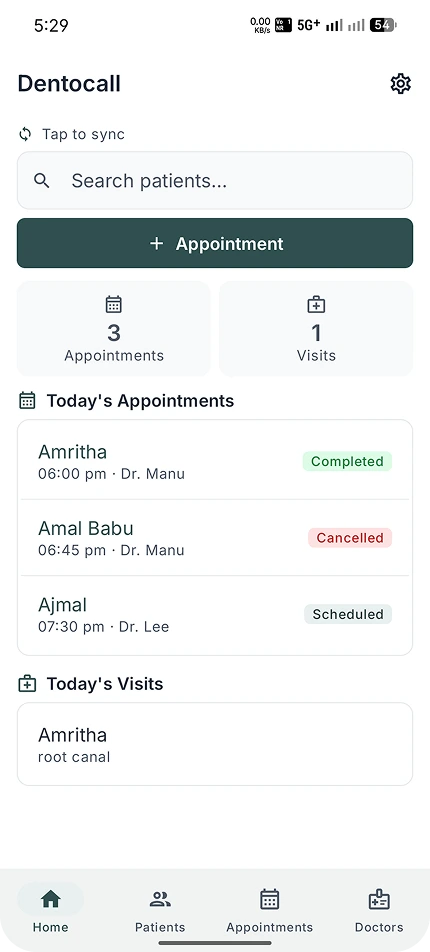
A Unified Dashboard for Faster Clinic Operations
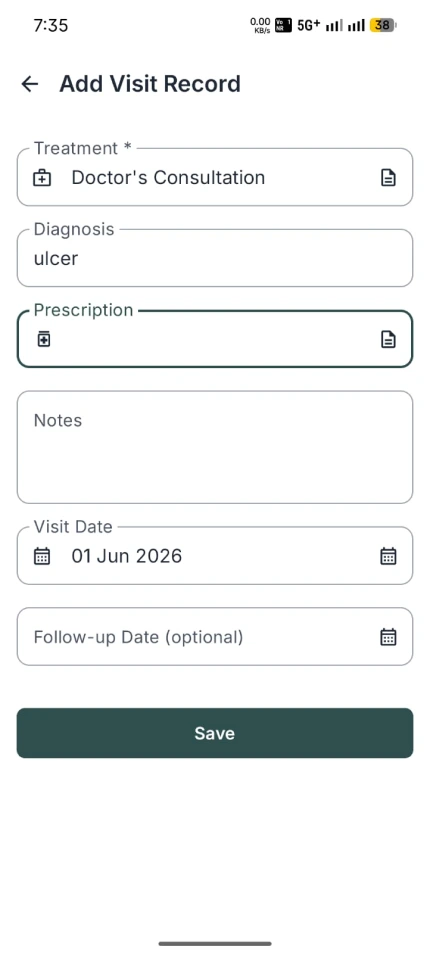
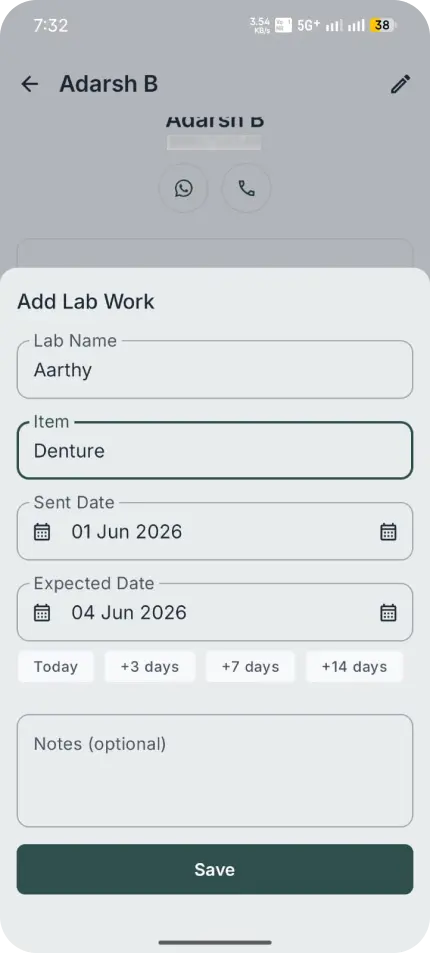
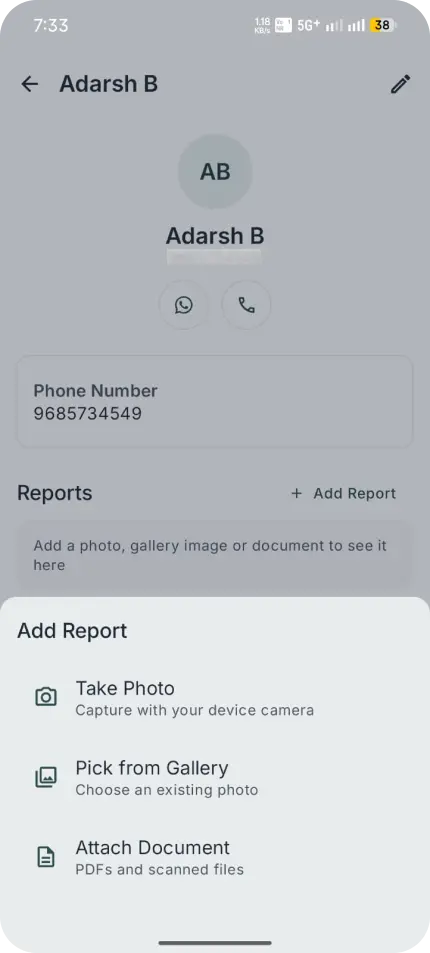
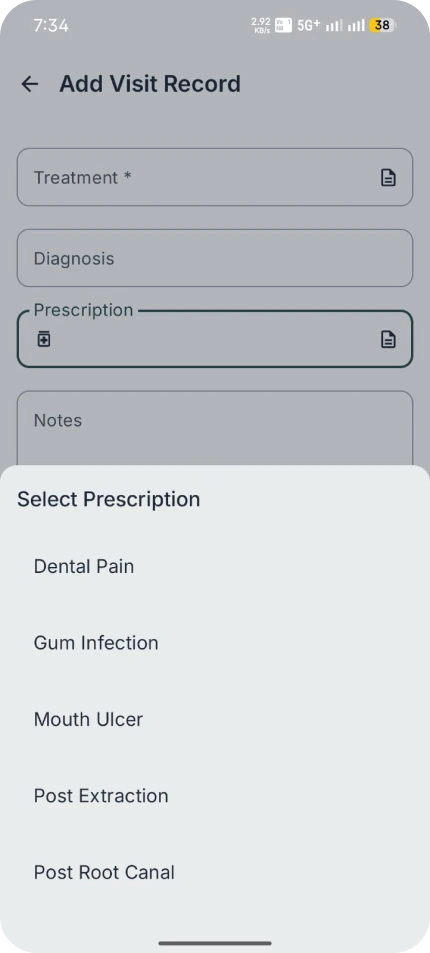
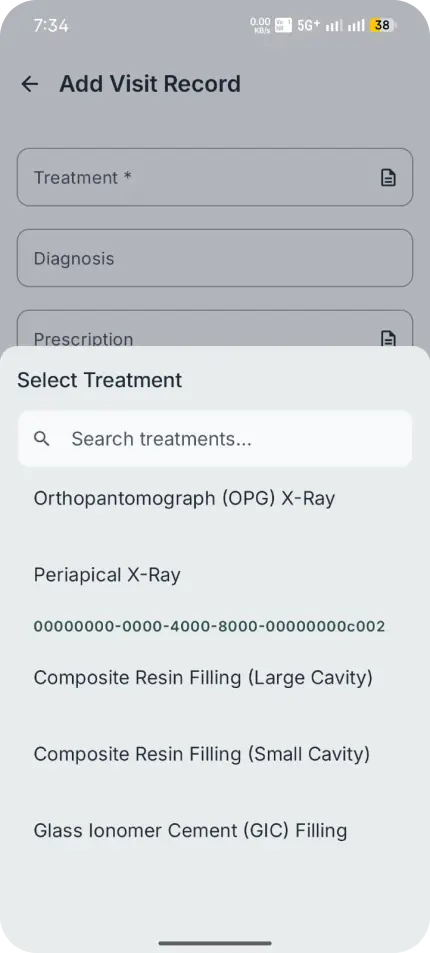
The form needed to be fast to fill, forgiving with partial data, and immediately useful. Doctors should be able to onboard a patient in under 60 seconds — even mid-consultation.